
This biography is dedicated to the Grandfather I never knew.

This story is a work in progress. As I uncover new facts or correct old ones, this page will be updated. I know there’s a lot to take in, and yes, some parts might feel a bit dense. Personally, I like to use the “Read Aloud” feature that’s built into most modern web browsers. Hearing the text spoken helps me better understand the flow, and it might help you too.
You’ll also notice that throughout this article, there are many links, some lead to Wikipedia or other historical sources, while others connect directly to profiles in this site’s family database. I encourage you to explore them; they add texture and context to Lyle’s story.
Preface: A Life Remembered
Lyle Daniel Van Volkenburg died 19 years before I was born, so for most of my early life, he was more of a name than a person. It wasn’t until 1997, when I learned I was going to be a parent myself, that my curiosity started to take shape. The idea of bringing a child into the world made me wonder where we fit into the bigger family picture. That’s when the genealogy bug bit, and it hasn’t let go since.
It bit even harder after I had my DNA tested recently. That experience didn’t just confirm my connection to Lyle and the Van Volkenburgs, it pulled me closer to them in a way I didn’t expect. It made everything feel a little more real.
Growing up, Lyle was never talked about in my family. Not in a secretive way, more like in a “let’s not stir up old pain” kind of way. For those of us who never knew him, he was just a quiet unknown absence. A reference point more than a memory.
Like in any family, some history stays buried. I’ve come to think of those hidden bits as two kinds of “family skeletons.” There are the documented ones, the facts you can prove with records. And then there are the hearsay skeletons, passed along through stories, photos, gossip, or tradition. Most of the time, the hearsay leads me to the paperwork. And somewhere in between the two is where the truth lives.
I’ll do my best to stick to what can be shown, but every so often I’ll share a personal theory if it helps connect the dots, especially when the records leave more questions than answers. I’ve found myself revising my thoughts more than once as new information surfaces, and I’m sure I’ll do it again. This is a living story, and I’m still learning how to tell it.
Lyle’s death was never something my family knew how to talk about. It was handled by the government in the most clinical, detached way possible, a mock funeral, held five long years after he vanished from the world. My mother, Darleen, and her sister, Nancy, were just little girls then. What they knew of their father came only in fragments, spoken in half-whispers by adults who talked around the loss but never through it.
There was no body. No certainty. No real answers. Just the assumption that he was gone.
But even that isn’t the whole truth.
Lyle Van Volkenburg served with honor in the Army Air Forces, only to die in the line of duty just three days after World War II officially ended. A heartbreaking reminder of the sacrifices made even as peace was declared.
With what we now know, it’s entirely possible that Lyle and his crewmates weren’t killed on impact at all. Their bodies were never recovered, which leaves the door open to other possibilities. Perhaps their plane was shot down. Perhaps it malfunctioned. Perhaps they survived the crash, only to be taken captive.
Even though the war was officially over, the jungle where they went down, “The Hump”, was still hostile. “Holdout” factions of Japanese soldiers refused to surrender, and remote prison camps were still active. We’ll never know for sure, but the possibility lingers. That maybe, just maybe, Lyle did not die in that crash. That he lived long enough to suffer in silence, far from home, forgotten by the country he served.
And that piece of the story was lost before anyone knew it was even there.
The government placed a small headstone at Alexandria National Cemetery. A symbolic patch of ground for Lyle and the three men who died with him. No body beneath it. Just a name.
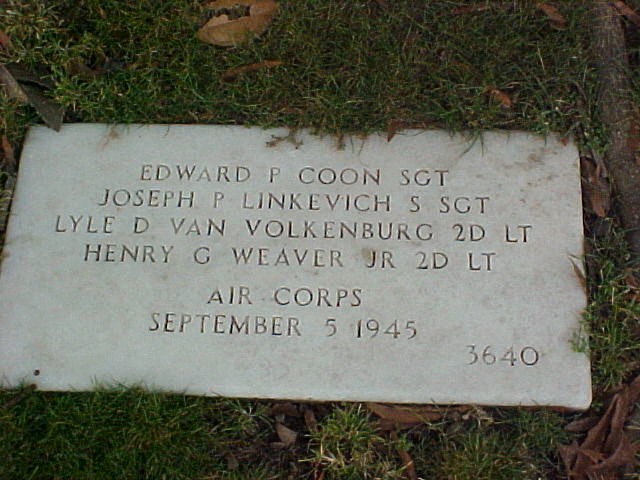
My mother once told me that her mother was informed there was nothing left of the crash site worth sending home, only ashes. Nobody knew if they even came from bodies or charred metal. They were gathered anyway, perhaps for show, perhaps for mercy. The government needed closure. The family was expected to take whatever closure they were given.
But it never came.
Lyle’s death didn’t just bring sadness, it left a void in the family. My grandmother, Laverna, was only 23 when she lost him. She was still so young, struggling with alcoholism, and lacking a sense of responsibility; it was a loss she never fully recovered from. Her daughters, my mother and aunt, were raised by their grandmother, Jeanette. Laverna battled for years, and alcohol became her way of life. Eventually, it became easier for everyone to treat her as though she were gone, even while she was still technically present. We knew her as “Grandma in Buffalo,” someone we rarely visited.
Laverna did remarry, to a kind man named Sonny. He cared deeply for her and did what he could to build a life together. But sometimes love isn’t enough to bring someone fully back from what they’ve endured.
I remember only one time meeting Laverna clearly. I was 18. My mom wanted to give it one more try, to see if there was anything left between them. We visited her in a small upstairs apartment, above a bar, in Buffalo. It was sparsely furnished and nothing in the refrigerator but beer. Sonny had prepared her for our visit. But when we arrived, it was like she was somewhere far away. She called me by the wrong name and didn’t recognize her own daughter. I saw Sonny watching her gently, with a kind of quiet acceptance, a man who’d stayed by her side, even when he couldn’t help her with her addiction. The ride home after that was quiet, not because we didn’t care, but because there wasn’t much left to say.
As I got older, I found myself thinking more and more about Lyle. About what happened, who he was, what had been left unsaid. My mom didn’t have much to offer, she’d never really been told much herself.
So, I reached out to my great-aunt Thelma, Lyle’s sister. She was thoughtful when we talked, choosing her words with care. I think it was hard for her to go back to those memories, but she saw I was genuinely trying to understand, and she shared what she could. It helped me fill in some of the gaps and directed me to Roulette Pennsylvania. The homestead of Lyle’s mother, Mildred Baker and where Lyle’s father, my great grandfather, Jack Vanvolkenburg was buried.
I wish I hadn’t waited so long. The next time I tried to call her, the line rang and rang. I had called the nursing home reception desk and told them I was family. They explained that Thelma had passed a few week’s prior.
In 2022, I connected with a second cousin, Henry Palmeter, on Ancestry.com, someone I hadn’t known existed before. His mother, Marjorie Van Volkenburg, was Lyle’s sister. Once we started talking, it felt like two halves of the same story finally found each other.
Henry had something I never expected: photographs. Real pieces of the past. He shared images of Lyle’s mother, Mildred Baker, and their grandfather, Daniel E. Baker, along with other relatives I had only seen as names in records. These photos weren’t just old paper, they were faces, expressions, presence. And they helped bring Lyle’s story, and that branch of the family, into focus in a way I’d never been able to before.
What I’m left with now is a puzzle with missing corners. A family shaped by silence. A man remembered only in fragments, by two daughters too young to truly know him, a wife who never recovered, and a sister who lived long enough to remember, but not long enough to tell it all.
Sometimes, I think grief isn’t just the loss of a person, it’s the loss of all the stories you never got to hear.
What I did eventually discover is that Lyle Daniel Van Volkenburg had a life that was emotionally complicated and he was a decorated spy and War Hero. I do not think the family ever realized this or they would have spoken about him more. I know for a fact that my mother, his daughter, did not realize this. She just knew him as her daddy who went off to the war and was killed.
What’s in a Name?
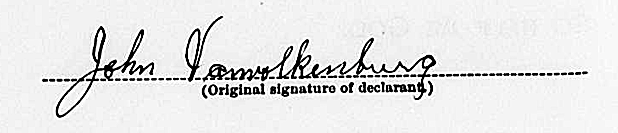
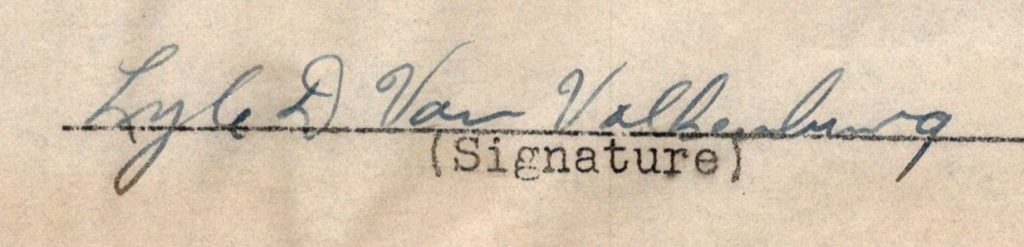
The Van Volkenburg name has seen a wide variety of spellings over the years. In my research, I’ve run across everything from Vanvolkenburg and Vanvolkenburgh to Van Volkenberg and Van Volkenburg. These variations often stem from the way names were recorded, sometimes by a census taker guessing at the spelling, or a clerk doing their best to transcribe what they heard. We’re especially lucky when we find a document that includes the person’s own signature, giving us a glimpse of how they chose to spell their name.
Census records, in particular, can be a treasure trove of name variations. One year you might see a “Volkenberg,” and ten years later, the same family might be listed as “Vanvolkenburgh.” And sometimes the individual themselves made conscious changes, perhaps to fit in, stand out, or simply because they felt like a change.
I’ve watched plenty of genealogists debate the “correct” spelling of a name, as if that tiny detail changes who a person was. Personally, I find it more charming than frustrating. These spelling quirks don’t alter a person’s story; they just add one more interesting piece to the puzzle we’re piecing together.
Origins: Roots in Hardship and Hope
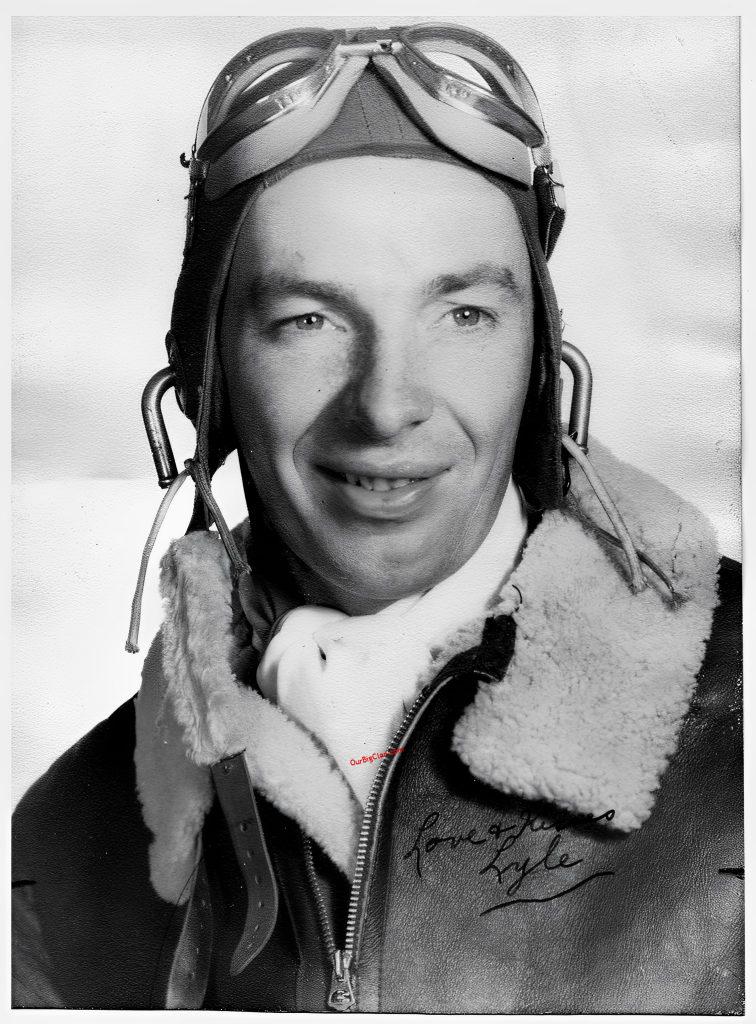
Lyle Daniel “The Lip” Van Volkenburg was born to John “Jack” Vanvolkenburg and Mildred A. Baker on the 20th of June 1916 in Niagara Falls, New York. Lyle was their first-born and only son. It is interesting to note at some point the Vanvolkenburgh name got changed to Van Volkenburg. John signed his name as Vanvolkenburg and Lyle signed his as Van Volkenburg.
As the research unfolds, I’ve discovered Lyle, his parents, and grandparents suffered a lot of setbacks and tragedies, but they never gave up their will to make something of themselves. Lyle was a smart and ambitious young man. After a few bumps in the road, he was motivated to achieve success and become the best he could be. He was able to become a decorated Flight Officer in the Army Air Force. He ultimately sacrificed his life for his country.
Lyle’s Parents: Love, Loss, and Legacy
John “Jack” Van Volkenburg: A Man of Ambition
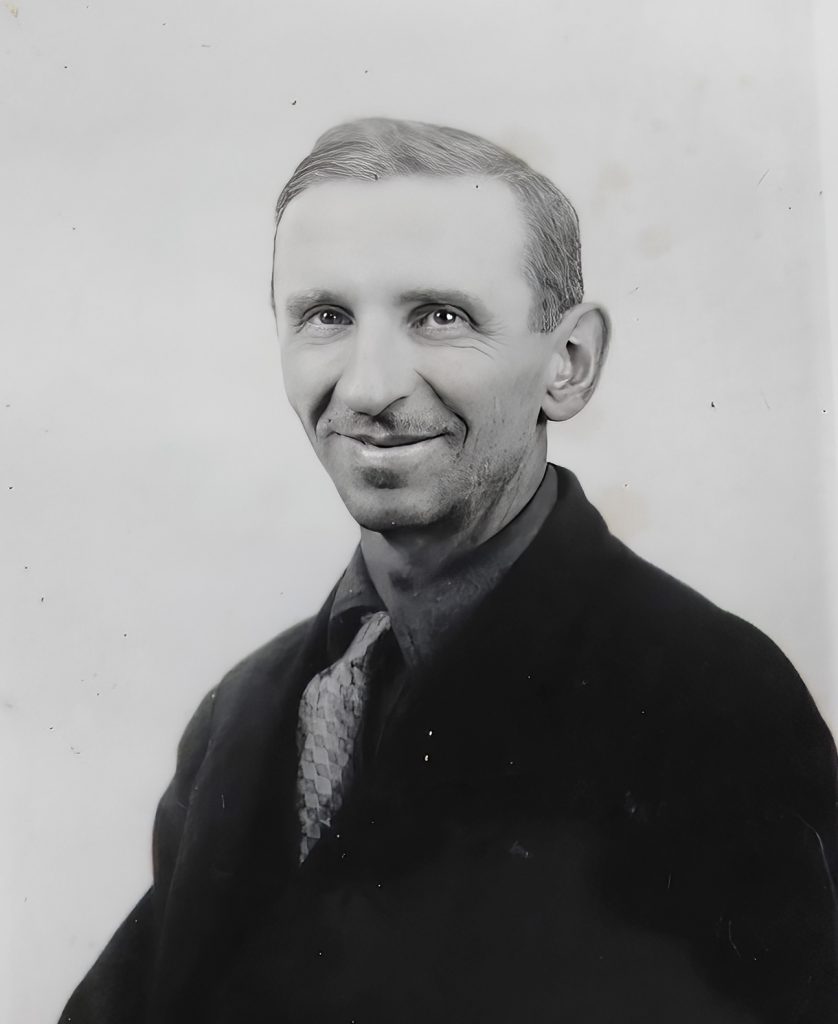
Jack Van Volkenburgh, was a Canadian immigrant. Jack was born on March 19, 1889 in Kennebec Township, Frontenac County, Ontario, Canada, to an unwed Mary Vanvolkenburgh. John’s birth registration listed him as an illegitimate child.
Jack and his mother, Mary Vanvolkenburgh, lived on the family farm with her father Sylvester Vanvolkenburgh. Jack had a rough childhood.
Jack’s mother, Mary, died on February 27, 1895, when Jack was 7 years old. Jack’s illegitimate birth left him in the care of his 66-year-old grandfather, Sylvester Vanvolkenburg.
Sylvester passed away in 1901 when Jack was 12 years old. We are not sure where Jack lived from 1901 to 1910. I speculate there were uncles who farmed nearby, who Jack may have lived with.
Jack declared on his 1917 World War I US draft registration that he served “2 weeks in 2 years” as a bugler and a Private in the Canadian Military. Back then you could serve when you were sixteen years old. This was a voluntary service at that time since there was no conscription.
We found 2 documents that shows Jack served 2 weeks in the Canadian 47th Frontenac Battalion of Infantry, No. 3 Company (Barriefield, Ontario). He served June 27-July 8, 1905 and then August 31-September 11, 1908.
When Jack married his second wife he listed he was previously married. There is no definite proof of who his first wife was, but a marriage record was found of the Union of John Vanvolkenburg and Nellie Bridenn on the 16th of April, 1909 in Rockfield, Leeds, Ontario. It shows Jack was age 21 on the document, which would have been his correct age. The document also lists Sylvester Vanvolkenburg as John’s father and was a farmer. Nellie Bridenn was 19 and parents listed as unknown. John’s occupation was listed as a Miller.
On the 1910 and 1920 US census, Jack states he moved to the US in 1904 and submitted papers for US citizenship. This meant he would have been around the age of 15 when he immigrated to the US. This does not really add up if Jack married in Canada in 1909, unless he was going back and forth between the two countries. Tracking Jack is a little fuzzy during these years.
For a bit, Jack was living and working at a factory in 1910 in Victor Village, Ontario, New York. He was listed as single. We do not know whatever became of his first wife.
At some point between 1910 and 1912, Jack left his factory job in Victor Village, Ontario, New York, and moved to Niagara Falls. In 1912 Jack is listed living at 340 Main Street, Niagara Falls, New York. This area is long gone and is now replaced by hotels and the entrance to the US/Canada Peace Bridge. During this time, Jack was employed as a Chauffeur. Niagara Falls is where Jack would meet his 2nd wife Mildred Baker.
On the 1930 US census Jack reports he immigrated to the US. in 1910 and was naturalized. This means he would have been 21 when he became a US citizen. This is incorrect. He may have lived in the us at that time, but we recently found (in 2025), court documentation which proves Jack became an official US citizen in Hampshire County, Massachusetts, USA on 27 NOV 1916 where he and his second wife, Mildred Baker were briefly living with Jack’s cousin Steward Vanvolkenburg. Jack was 27 years old working as a Chauffer in Massachusetts when he became a legal US citizen.
Mildred A. Baker: Strength in the Face of Adversity
Mildred A. Baker, was born on November 4th, 1897 to Daniel E. Baker and Mary Dean(Dehn) of Potter County, Pennsylvania. Mildred’s father, Daniel E Baker, was a respected Constable for many years in Austin, Pennsylvania. He later became the Chief Deputy Sherriff of Potter County.
Mildred’s grandfather was the well-known Potter County, PA pioneer Amandan Baker. Amandan was a Civil War Soldier and the first to be buried in the Fishing Creek Cemetery in Potter County, PA. Local folklore has it that Amandan Baker haunts the cemetery to this day. His ghost has been seen carrying his war boots over his shoulder.


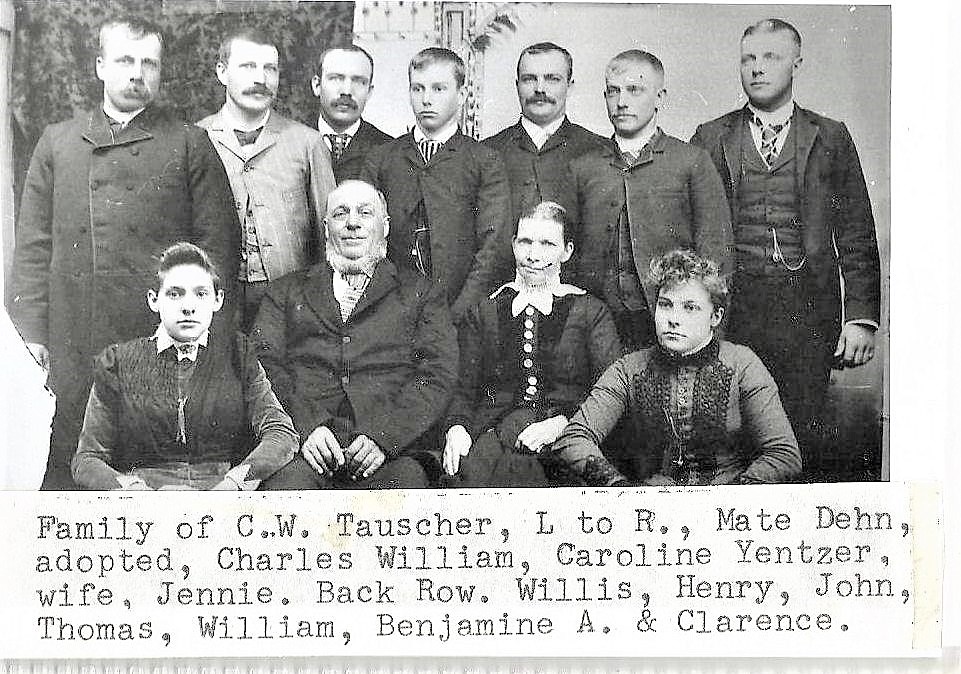
Mildred’s mother, Mary Dean (Dehn) died on April 17, 1909 at the age of 38. Mildred was 12 years old. Mary’s biological parents were Mary Tauscher and Michael Dean(Dehn). Mary’s father was from Germany.
Side Note: Mary Dean was adopted by the prominent Charles and Caroline Tauscher. She went by the name “Mate”. It is unknown what became of Mary’s biological parents.
From Potter County to New Beginnings
After Mary Dean Baker passed away, Mildred’s father, Daniel Baker, stayed on as Constable of Austin, Pennsylvania. The 1910 census offers a glimpse into that chapter of his life: Daniel, then 40 and a widower, was living at 13-B Rugaber Street with his daughter Mildred, his two sons, and a 36-year-old married “housekeeper” named Anna Vanetten. The census lists Anna as married, but no husband is mentioned, a detail that leaves room for speculation, as does the nature of her place in the household. I did find out that her husband was in jail and it makes me wonder if Daniel Baker had put him there.

In 1912, Daniel ran for Sheriff of Potter County. He was well-liked and, according to the Potter Enterprise, would likely have won, if not for the flood that year. The town of Austin was nearly destroyed when the Bayless Dam failed, causing the infamous “Austin Flood.” Over 80 lives were lost, and much of the town was wiped out. Daniel’s home stood near the site of the disaster, and there’s now a marker within feet of where it once stood, a silent reminder of what was lost.
I can’t help but feel that if the flood had never happened, everything might have been different. Maybe the Bakers would have stayed. Maybe Mildred would never have crossed paths with Jack Vanvolkenburg, the man she would later marry. It’s one of those turning points you only see in hindsight, where tragedy and chance reshape an entire family’s future.
Though Daniel Baker lost the 1912 sheriff’s race, he didn’t stay out of law enforcement for long. The newly elected sheriff, Ned P. Clark, appointed him deputy almost immediately. That January, Daniel moved his family from Austin to nearby Roulette, Pennsylvania to start the next chapter of his career. At the time, his daughter Mildred was just 14. Sometime the previous year, Daniel had married Anna Sawyer. This was the same “housekeeper”, Anna Vanetten, noted in the 1910 census, as the local newspaper reported he had relocated with his wife.
But the job, and the small-town life that came with it, didn’t last long. By late August of 1913, Daniel resigned as Deputy Sheriff. Packing up everything, his own three children and Anna’s three, they left rural Potter County behind and headed for the bustling modern city of Niagara Falls, New York. Mildred was around 15 when they moved, just on the edge of adulthood.

It’s not hard to imagine why Daniel left. Living in a small town meant living under the constant gaze of neighbors and newspapers alike. Every decision, every misstep, became public record. He may have simply reached a breaking point, tired of being watched, tired of the scrutiny, ready to start fresh somewhere bigger, somewhere quieter in its own way.
Niagara Falls offered that opportunity. He initially became a police officer there, the move marked a clear break: a man choosing reinvention over routine, and a new beginning for a blended family caught in the wake of small-town life.
When Jack Met Mildred: A Fateful Union
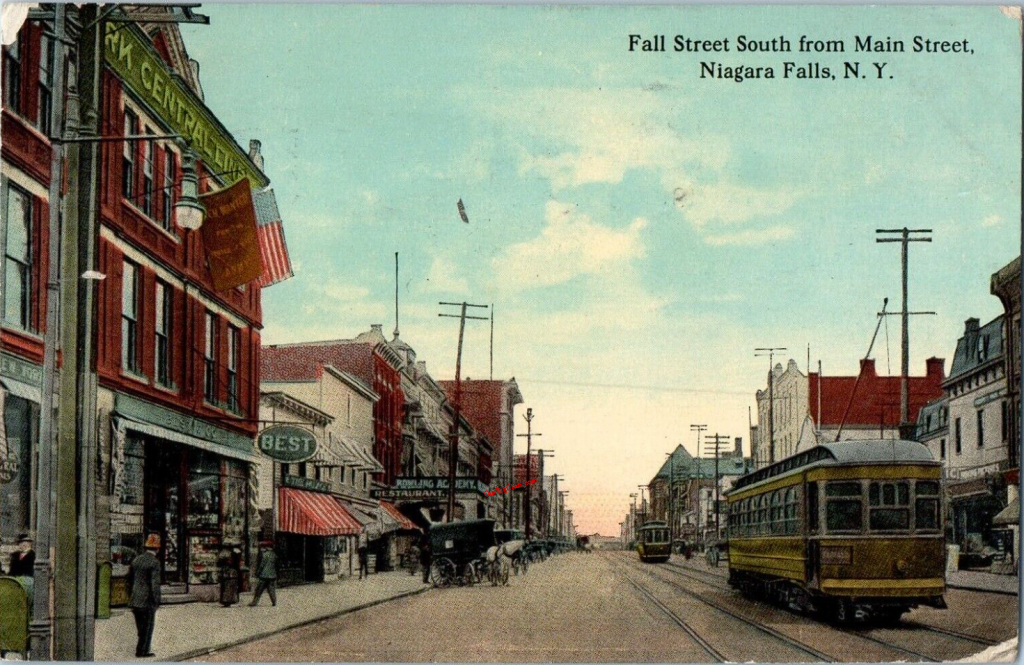
Sometime between 1913 and 1915, Jack Vanvolkenburg crossed paths with the Baker family in Niagara Falls, New York, meeting not only his future father-in-law, Daniel E. Baker, but also his future wife, Mildred. The specifics of how they met have been lost to time, so I have to rely on the available records to piece things together.
When Jack arrived in Niagara, he was working as a Chauffeur. Daniel, meanwhile, had taken a position as a police officer in the city. Mildred, who was still in her mid-to-late teens, was likely at home helping care for her younger brother, Harold Amandon Baker. It’s not hard to imagine their paths crossing in the rhythm of daily life, a working man, a watchful father, and a young woman whose world was just beginning to open up.
To recap, here’s what we know about Jack’s early life: he was born out of wedlock, and the identity of his father remains undocumented. Jack’s mother died when he was just seven years old, and he was raised by his elderly grandfather until around age twelve. After that, a three-year gap exists in his story, we don’t know where he lived or who cared for him between the ages of 12 and 15.
What we do know is that Jack left Canada for the United States in 1904 at the age of 15. He briefly enlisted in the Canadian military in 1905 and again in 1908, but only for a couple of weeks as was required in Canada. Records also suggest he married his first wife, Nellie Bridenn, in 1909, and they may have had a child together named Clifton S. Vanvolkenburg, though very little is known about that relationship, and it seems not to have lasted. More research needs to be done on this.
By 1910, at age 21, Jack was working in a factory in Victor, Ontario County, New York. Two years later, in 1912, he was living in Niagara Falls and working as a Chauffeur. His residence at the time was 340 Main Street, a location that has since been replaced by commercial development and hotels.
Around this same time, Mildred Baker’s life took a major turn. After her mother’s death at age 12, she remained with her family under the care of her father, Daniel Baker, a respected constable. In 1913, Daniel moved the family from the small town of Roulette, Pennsylvania to the bustling city of Niagara Falls, New York. There, they lived at 454 Elmwood Avenue.
The 1914 Niagara Falls, New York, City Directory shows Jack was living at 551 Fifth Street, Niagara Falls, New York as a boarder. There is no longer a house there and it is just an empty lot.
According to the 1915 New York Census, Jack was single and a lodger in a boarding house on 513 Walnut Avenue, in Niagara Falls, New York. This was just around the corner from the Fifth Street House he lived in previously. The census reported he was working as a Chauffeur.
Mildred was just 15 when she arrived in Niagara. Jack was 23. Somewhere in the everyday life of a growing industrial city, their paths crossed. I wish I could tell a fuller, more romantic story of how Jack and Mildred met, but all we really know is that they met sometime between 1913 and 1915, and that was enough to change the course of both their lives.
Jack and Mildred’s families lived only about a mile apart in Niagara Falls, New York. A trolley line connected their residences, and the city offered no shortage of places for young people like them to meet, socialize, and build a life. Niagara was thriving, bustling with opportunity and innovation.
By the late 19th century, Niagara Falls had already begun to establish itself as a hub of industry and commerce. Electricity was being generated there as early as the 1880s, and with the rapid growth of the Second American Industrial Revolution, the city expanded dramatically between 1900 and 1920.
In 1900 alone, the Mill District housed 265 manufacturing plants, and the population had reached 20,000. The local power plant didn’t just bring electricity to the city, it became a tourist attraction in its own right. Those developments turned Niagara Falls into a true boom town. By 1920, the population had jumped by 160%, from 20,000 to nearly 50,000 people.
Jack and Mildred lived right in the midst of this change, a modern world for its time, full of conveniences and jobs. It must have been an exciting time for them and their growing family, living in the heart of a booming, energetic village where their paths crossed.

By doing a bit of simple math, and perhaps a touch of raised eyebrows, we can deduce that Mildred was just 17 when she became pregnant with her first child, Lyle, sometime around September 1915. This was roughly two months before she married Jack, with the wedding taking place on November 3, 1915, just one day shy of her 18th birthday.
It’s interesting to note that the marriage registry for Jack and Mildred lists Sylvester Vanvolkenburg as Jack’s father. This was likely done for appearances. Sylvester was actually Jack’s grandfather. Admitting he didn’t know his father, or that he had been born out of wedlock, would have been socially awkward and potentially embarrassing. At the time, the slang term for a child born under such circumstances was “bastard,” and it carried a strong stigma, particularly in the religious, farming communities where Jack grew up. People and churches often looked down on these children and their families, and such matters would almost certainly have been the subject of town gossip.
That same year, Mildred’s father, Daniel Baker, was working as a motorman for the International Railway Company in Niagara Falls, and Jack moved in with the Baker family who lived at 922 Main Street. It was there that Mildred and Jack welcomed their firstborn, Lyle, into the world on June 20, 1916.
Jack and Mildred ended up having a total of 5 children; Lyle, Thelma, Mabel and Margie (the twins), and Doris.
Jack and Mildred continued living in Niagara Falls, New York to raise their family. The census of 1920 shows the family living at 922 Main Street in Niagara Falls, New York. Jack was a mechanic at a local garage and Mildred stayed at home and took care of the children. Lyle was 3 years old, Thelma was 2, the twins were 1 year old, and Doris was just born in January of 1920.
Tragedy Strikes
Jack’s wife and the mother of his children, Mildred Baker Van Volkenburg, died on December 5, 1923, in Lockport, New York. For years, the family believed she had contracted tuberculosis and passed away at a sanatorium, a story that felt both plausible and heartbreakingly familiar for the time, but the family was not completely sure. It wasn’t until 2024 that cousin Henry Palmeter traveled to Buffalo to get the official confirmation, the death certificate verified that Mildred had indeed succumbed to TB.
She was laid to rest in her family plot at Lyman Cemetery in Roulette, Pennsylvania, next to her own mother, leaving a quiet space that spoke volumes of loss.

Mildred’s death left Jack with the impossible task of raising five children on his own. Lyle was only seven, still a boy in need of guidance and care, and his four siblings were just as dependent. Jack continued to work as a mechanic during the week, but his heart pulled him back to Roulette on weekends. It seems likely that he relied on other family members to help care for the children while he was away. Newspaper clippings from the time show the children visiting aunts, grandparents, and other relatives, small glimpses of a family doing their best to hold together in the face of tragedy.
Through it all, Jack carried both the burden and the responsibility of a father determined to keep his family afloat, moving between work, home, and the ever-present ache of loss.
New Beginnings: Love, Blended Families, and Uncertainty

Jack was a respected, hard-working man, a provider who carried the weight of his family’s survival on his shoulders. He was likely proud and independent, unwilling to rely heavily on his in-laws or extended family for help in raising his children. Moving back to Roulette, Pennsylvania, probably wasn’t an option he wanted to consider; job opportunities there were scarce, and he had mouths to feed.
At some point, Jack relocated from Niagara Falls to Buffalo, New York, to work as a mechanic. By 1925, the census shows him living with all of his children at 728 Kensington Avenue, a building that housed a garage on the ground floor with an apartment above. It’s likely that Jack’s family lived in that upstairs apartment while he maintained the business downstairs. The setup was practical: Jack could start his workday just steps away from home, while the children attended the nearby school.
Doris, the youngest at five, would have stayed at home under Jack’s watchful eye, but it’s easy to imagine him trying to balance work and childcare seamlessly in this environment. The arrangement offered stability, a sense of routine, and the chance for Jack to keep his family close while continuing to provide for them. The building still stands today, a quiet reminder of a man determined to create a home and livelihood for his children against the odds.
Jack and Olive: A Difficult Partnership
Jack and the kids would typically travel to Roulette, PA on weekends to visit family. The kids stayed overnight with various family members. This gave Jack the time and chance to strike up a romance with the divorced Olive Corsaw Yentzer. The pair were perfect for each other in regard to their circumstances.
A bit of Olive’s background. Olive was raised in Roulette, PA, and became pregnant by Charles Yentzer when she had just turned 12 years old. Charlie was a 33-year-old farmer at the time. In those days this was legal but still would have been frowned upon because he did not marry her, and their child was born out of wedlock. In this day and age, guys like Charlie are arrested for child abuse and statutory rape.
Olive became pregnant with their second child sometime in July 1904. Charlie and Olive got married 3 months later. This would have been a scandal at this time, in the religious community, that would not have been openly talked about. Charlie was 36 and Olive was 15 when they got married.
Olive and Charles had two known children together. Those children were Eva Yentzer who died in 1914 and Berdina Yentzer who died in 1918. Both children happen to be 13 when they died. At some point, Olive and Charles divorced. There was a 3rd child Oleado Miller Yentzer, but there is speculation that Oleado may have had a different father.
It’s clear that when Jack and Olive met, they were both carrying emotional baggage. Yet, in each other, they found the chance to reshape their lives. For Jack, Olive brought the promise of a home. For Olive, Jack offered a way out of Roulette, a fresh start for her and her son, Oleado.
Jack Van Volkenburg and Olive were married on December 23, 1926, in Roulette, Pennsylvania. Both were in their late 30s. Jack was 37, Olive 38, and Lyle, Jack’s son from his previous relationship, would have been about 10. Not long after the wedding, Olive and Oleado moved in with Jack and his family.
Sometime between 1925 and 1930, this newly blended family made a big move. They relocated to Buffalo, New York, settling into a house at 342 Herman Street in the Village of Buffalo. By the time they appear in the 1930 census, Lyle was around 14 years old. The house, still standing today, hasn’t changed much, a quiet witness to the story that unfolded within its walls.
The move brought opportunity. Olive invested in a commercial truck for Jack, putting it in her own name, a smart move that gave them more financial security. Together, they started a small trucking business: Jack handled the hauling with an assistant, and Olive managed the home and watched over the children. Little by little, the pieces of their new life started to fall into place.
Their home was in a bustling part of town, surrounded by shops and businesses, many of which young Lyle would later form connections with. It was a time of growth and promise for the family, a seedling of prosperity planted in the rich soil of Buffalo’s commercial heart.

Lyle Coming into His Own: Adolescence in Flux
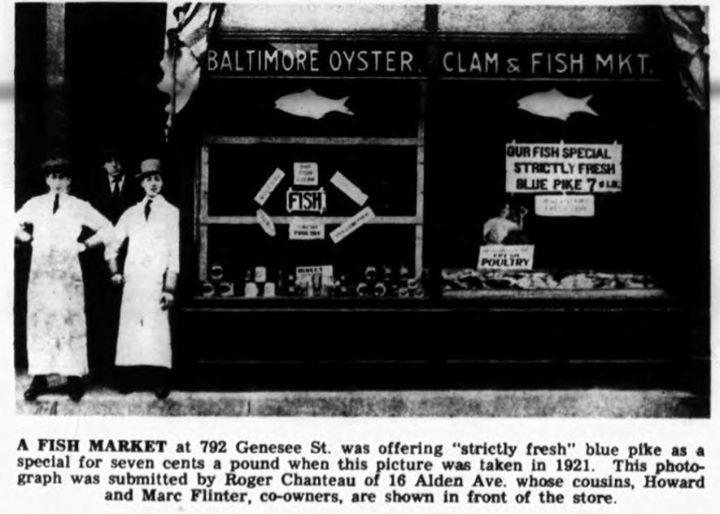
Lyle was no stranger to hard work. Around 1930, when he was just 14 or 15 years old, he began working at the Baltimore Fish and Oyster Company, located at 792 Genesee Street in Buffalo, New York. It was an easy five-minute walk from the family’s home, a convenience that no doubt helped shape his growing sense of independence and responsibility.
Though still just a teenager, Lyle quickly earned the respect of his employer. Mr. Flinter, who ran the business, described Lyle as “reliable and trustworthy… a good worker, steady in his habits.” Coming from a business owner in the depths of the Great Depression, this was high praise indeed.
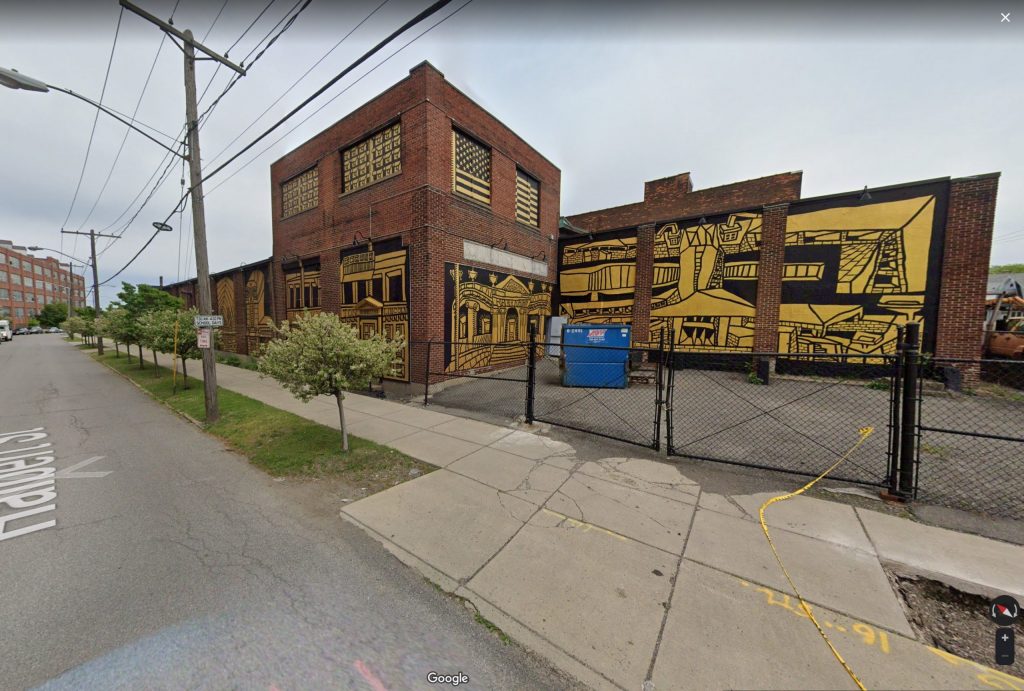
Today, the Baltimore Fish and Oyster Company is long gone, and Mr. Flinter’s name has faded into history. Yet, remarkably, the building still stands. Even the old sign endures, captured here in a 2022 image from Google Street View, a quiet tribute to a young man whose work ethic began shaping his future long before adulthood arrived.

Work and Responsibility: Ice, Sweat, and Grit
Lyle and his father Jack were cut from the same cloth, determined, enterprising, and unafraid of hard work. The 1930s were unforgiving years. During the Great Depression, jobs were scarce and families struggled to make ends meet. But rather than give in, 16 year old Lyle and his father took charge of their fortunes.
In 1932, the two launched a small ice delivery business, an “Ice Station Operator” venture. This was before refrigeration was commonplace. Ice was a vital part of daily life. used to keep food cool in iceboxes, preserve meat and milk, and even make summer bearable during heat waves. That made ice both a necessity, and an opportunity.
But opportunity didn’t come easily. The ice business was brutally competitive, with multiple vendors jockeying for the same customers. Families weren’t exactly flush with cash, either. There were no government aid programs to fall back on. You either worked, or you went hungry.
So, that’s what they did. They worked.
Lyle and his father Jack began each day long before the sun came up. Around 4:00 AM, they’d rise, lace up their boots, and head out into the still dark streets of Buffalo. Their first stop: the Culliton Ice Company at 72 Jewett Street, about a 10-minute drive from the family home on Herman Street.
With his youth, strength, and growing independence, Lyle likely did much of the heavy lifting, literally. while Jack handled driving and bookkeeping. The work was unrelenting: long days of hauling 50 or 100 pound blocks of ice, wrestling them up steps or through back doors, sometimes in the heat, sometimes in the dead of winter.
But it wasn’t just backbreaking, it was character building. This was the foundation of Lyle’s work ethic, discipline, and physical resilience, all traits that would serve him well later in military service.
There, in the cool dawn air of the loading dock, Lyle and Jack would line up along with other drivers, waiting their turn. Then came the hard part: hauling block after block of ice into the truck, stacking them in sawdust or burlap to keep them from melting. By the time they were done loading, they’d already put in a workout most men would call a day.
4:30 AM – Load blocks of ice at the ice house
6:00 AM – First delivery: families trying to beat the heat
12:00 PM – Lunch on the truck, maybe a sandwich with the ice chips
2:00 PM – Commercial clients: butchers, groceries, cafes
5:00 PM – Last deliveries—freezers topped up for the night
7:00 PM – or later – Head home, covered in sawdust, hands aching—but still smiling
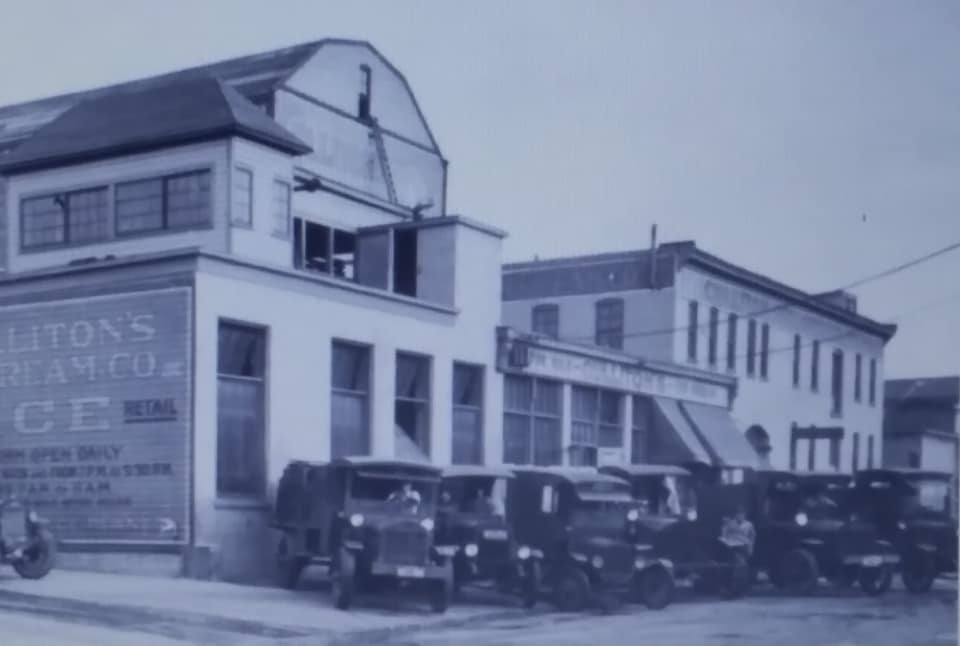
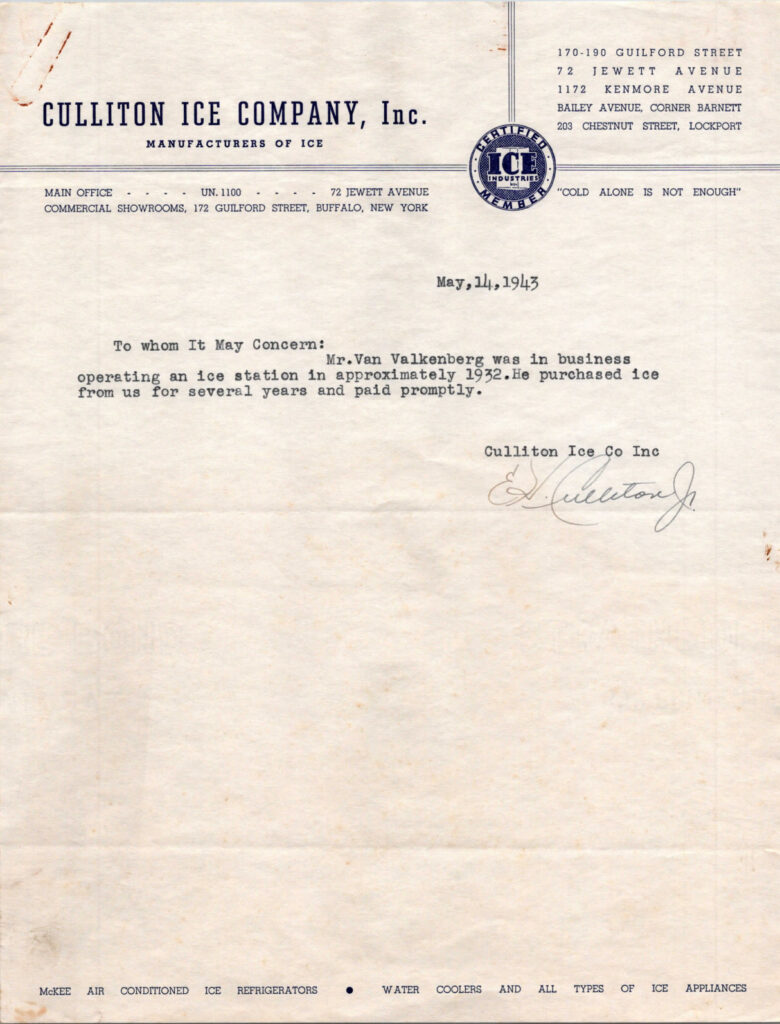
Culliton’s was more than just a warehouse, it was one of the biggest ice distributors in the city. The sprawling building took up a whole block, a massive space packed with 20 to 100 pound blocks of ice, all cut and frozen months earlier just for deliveries like theirs. And those blocks didn’t load themselves.
Repeat. Seven days a week.
From there, they’d fan out across Buffalo, delivering to families who relied on ice to keep food from spoiling, to butchers and bakeries who needed it for storage, and even to small farms just outside the city. With no breaks and no days off, the delivery route took them well into the evening. Seven days a week, rain or shine, hot or freezing cold, the work had to be done. Their customers depended on them.
It wasn’t glamorous, but for Lyle and Jack, it was more than a job. It was their livelihood. Their bond. Their legacy.
Troubled Times: Youth Tested by Loss and Hardship
Lyle’s early years were shaped not only by hardship but by deep emotional trauma. He had lost his mother at a formative age, and before he had the chance to grieve, he found himself navigating the unpredictability of a blended family. While Jack, his father, tried to build a new life with Olive, the emotional toll on Lyle and his siblings was significant.
Family accounts make it clear that Olive did not treat all the children equally. It has been said that she favored her own son, Oleado, while showing neglect, even cruelty, toward Jack’s daughters. Some relatives recalled that the girls were denied food, forced to scavenge from garbage bins to survive. More troubling still, Olive reportedly allowed Oleado to mistreat the girls, with no intervention or protection.
By the time Jack and Lyle returned from long days delivering ice, the girls were already in bed, with Olive assuring them they had been fed. But, as was later learned, this was far from the truth. These allegations of physical, emotional, and even sexual abuse cast a heartbreaking shadow over the household. One can easily imagine that Lyle and Olive never got along, especially given that he was in his teenage years, a time already fraught with rebellion, hormones, and a search for identity.
Under such unbearable conditions, it’s perhaps not surprising that Lyle’s behavior began to spiral. Acting out became a form of coping, though his actions eventually caught the attention of the courts. While we don’t have access to his juvenile records, it’s clear that his behavior reflected deep pain rather than malice.
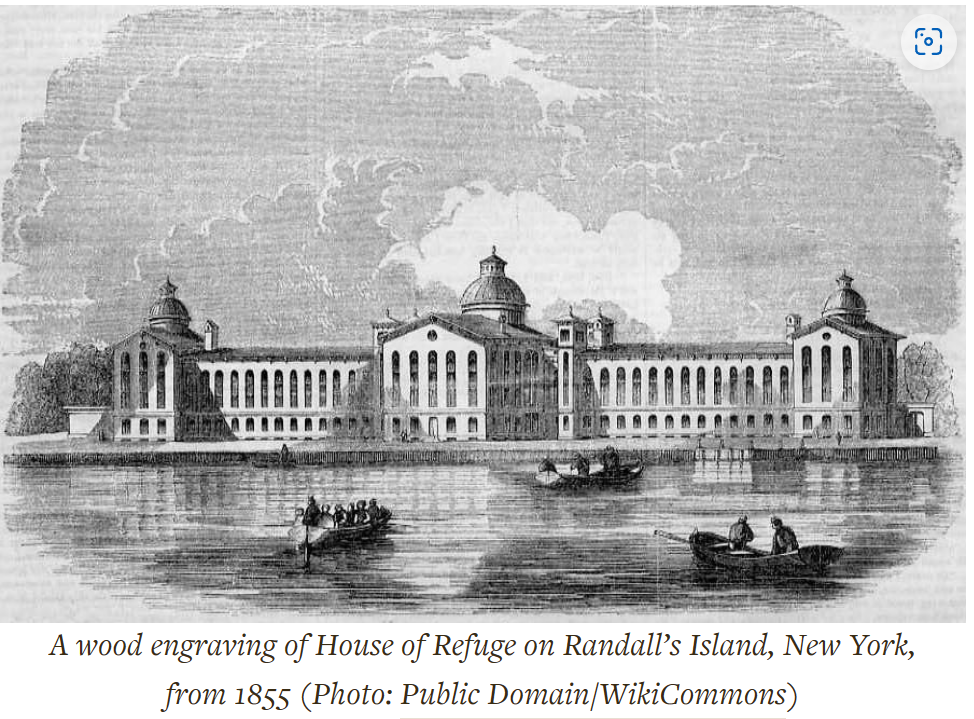
In 1933, when he was just 17, Lyle was sent to The House of Refuge on Randall’s Island. Officially intended as a “refuge” for troubled youth, the institution was in reality a harsh and unforgiving place. He would have shared space with orphans, juvenile offenders, and even psychiatric patients, enduring an environment with minimal oversight and frequent abuse. Accounts from that era describe drunken guards and brutal conditions, making it easy to imagine how profoundly this chapter affected him. Amid the hardships, however, there was a moment of personal significance: Lyle received his confirmation while at the facility, a milestone that offered a small measure of stability and identity during a turbulent time.
Despite these challenges, Lyle survived. Like many young men of his generation, he would soon seek structure and purpose later through military service, a path that offered discipline, camaraderie, and perhaps a way to move beyond the shadows of his youth. We are not sure the exact dates that Lyle was at the institution.
Another Tragedy

On July 25, 1934, tragedy struck the Jack Vanvolkenburg family. Jack Vanvolkenburg and his assistant were hauling a heavy load of 100 pound bags of fertilizer down the notoriously steep Wurtsboro Hill on NY Route 17. The hill ended in a sharp curve, and despite his experience, Jack lost control of the truck.
Authorities at the scene speculated that Jack may have deliberately steered the vehicle into the mountainside rather than risk the lives of others on the road. When the truck collided with the embankment, the momentum of the heavy fertilizer bags continued forward, crushing the cab. Jack most likely died instantly, while his assistant survived the accident.
Jack was only 45 years old. Lyle, just 18 at the time, suddenly found himself without his father, facing the harsh realities of adulthood in the aftermath of a devastating loss.
According to my grandaunt, Thelma Vanvolkenburg, after her father Jack’s tragic death, their stepmother, Olive Corsaw Vanvolkenburg, abandoned the Vanvolkenburg children. The girls were sent to live with various family and community members back in Roulette and Port Allegany, Pennsylvania, while Lyle remained in Buffalo under the care of his grandparents, Daniel and Pluma Baker.
Cousin Henry Palmeter provided additional details: Marjorie went to work as a nanny for the Barron family in Port Allegany, while her twin, Mabel, was placed with the Lawrence Gallup family so the sisters could finish high school together. The twins were especially close, and this arrangement allowed them to stay connected. Thelma, pregnant at the time, was sent to a sanitarium to give birth to her son. At present, the location where Doris ended up living remains unknown.
Olive Corsaw Van Volkenburg later remarried, tying the knot with Philip Kujaneck on March 29, 1936. That marriage eventually ended in divorce. Some family members speculated that Olive and Philip ran off with the insurance money from Jack’s death and moved to California, though this has never been confirmed. Olive passed away in 1949 in Oswego, New York. She and Jack are buried in the same plot at Fishing Creek Cemetery (also known as Durward Cemetery) in Potter County, Pennsylvania. However, family members debate whether Olive truly rests there, as the tombstone was never completed with her death date.

Searching for Stability: Family, Home, and Hope
1934 was a year of profound upheaval for Lyle. At just 18 years old legally a man, but still only beginning to shape his own identity, his world was shattered. He had recently lost his father in a tragic accident. His stepmother, Olive, left Buffalo and scattered the Vanvolkenburg children among relatives and community members in and around Roulette, Pennsylvania. In a matter of weeks, everything familiar to Lyle had dissolved. The family’s ice delivery business, once their livelihood, came to an abrupt end with the destruction of the truck and Olive’s departure.
At such a young age, under the weight of grief and abandonment, it would have been easy for Lyle to fall into despair or drift toward a troubled path. Many young men would have, and did, lose themselves in these circumstances. But Lyle did not. He persevered. Something inside him, perhaps forged by the hardships he had already endured, pushed him forward. Rather than succumb, he chose to fight for a future.

Fortunately, not everyone in his life had disappeared. His maternal grandfather, Daniel E. Baker, and Daniel’s wife, Pluma, were still living in Buffalo. They brought Lyle into their home at 47 College Street, offering him shelter, stability, and a much-needed thread of continuity. It was here, from 1934 to 1937, that Lyle steadied himself and began laying the foundation for the life he would build. He worked, went to church, and continued making trips down to Pennsylvania to see his sisters. Driven, resilient, and no doubt shaped by adversity, he was determined to make something of himself.


It’s easy to imagine how Lyle’s interests began to take shape during this period. His Maternal grandfather, and namesake, Daniel E. Baker worked at The Curtiss Aeroplane and Motor Company, one of the most innovative aircraft manufacturers of the era and a cornerstone of American aviation history. Daniel was employed as a night watchman, and it was likely through him that Lyle’s fascination with airplanes began.
One can picture Daniel, proud of both his role and his curious young grandson, quietly ushering Lyle into the vast factory after hours. In the dim light, rows of unfinished fuselages and the gleaming machinery of early aviation would have seemed like something out of a dream, hulking aircraft in various stages of assembly, men’s ingenuity turned into steel and flight. To a young man searching for purpose, the factory must have felt like a place where the future was being built.
That interest soon became more than just a spark. Lyle would himself go on to work at the factory. In those hangars and on those assembly lines, he wasn’t just making a wage, he was becoming part of something larger. The days of delivering ice and hauling 100 pound blocks were behind him. Now, he was helping shape the next frontier: the sky and his future of becoming an Army Air Force Pilot.
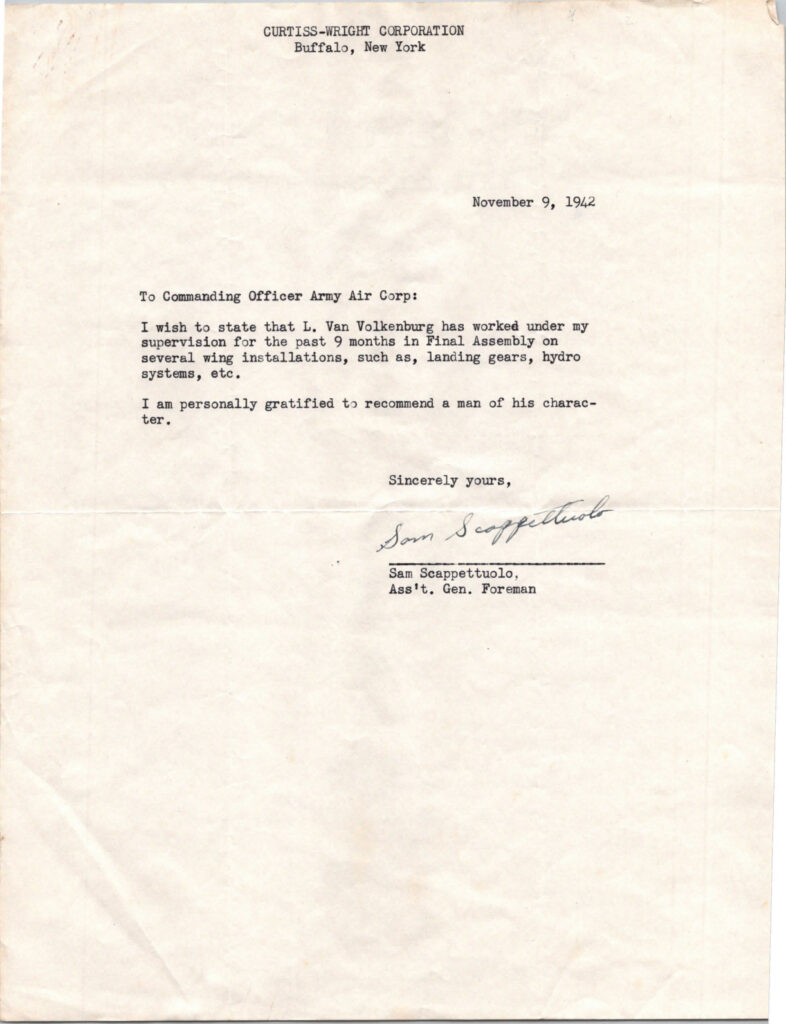

While living with his grandparents, Lyle became an active member of the Churchill Tabernacle Church in Buffalo, NY from 1934 to 1937. Pluma his step-grandmother, most likely inspired Lyle to go to church. She was known to be a religious woman. Finding his faith would have been good for Lyle at the time since he was grieving the death of his father and the breakup of his family.
Churchill Tabernacle was a famous church in its day. A Franciscan Fiar started it in 1927 and broadcasted services over the radio airwaves. It was one of the first churches to broadcast religious services to a large immigrant Polish population. The broadcast reached Chicago, Cleveland, Detroit, Milwaukee, Scranton, and Pittsburgh and farther out across much of the US to where the airwaves would reach.
Lyle was a faithful member of the church. He took part in the famous Churchill Tabernacle Choir. His voice would have been heard in the northern parts of the US at the time, as far as the radio waves would travel.

A Meeting of Hearts: Lyle and LaVerna
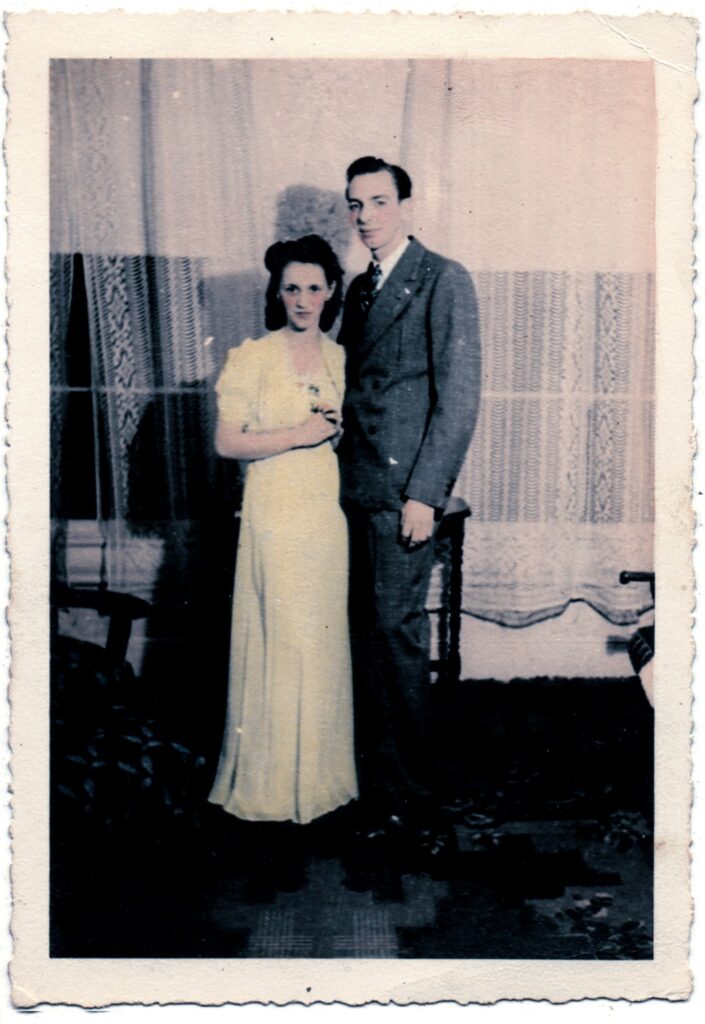
How Lyle and LaVerna first met remains a matter of speculation, though there are a few plausible scenarios. Both of their families lived in the Niagara Falls and Buffalo, New York areas, and it’s possible the families knew each other.
When Laveran’s parents were still married the family lived in Niagara Falls and may have known each other as children.
Between 1930 and 1935, LaVerna and her recently divorced mother, Jeanette Heintz Villone, were living in Buffalo, just four blocks away from Lyle. They may have attended the same grade school or spent time together playing in the neighborhood, or Lyle delivered Ice to Jeanette. This proximity makes this scenario the most likely way they first crossed paths.
A third possibility is that their meeting was connected to Lyle delivering ice to LaVerna’s mother Jeanette, and stepfather Henry Wolf owned a 100-acre dairy farm at 527 4 Rod Road in Alden, New York. The farm included an ice house, and they would have regularly purchased ice to keep their milk from spoiling. It’s entirely possible that Lyle was their iceman, bringing ice to the farm and forging a connection along the way.
Whatever the exact circumstances, the result was the same: Lyle and LaVerna met and fell in love.
Jeanette Wolf was my great-grandmother and this author remembers her telling how her daughter (my grandmother) Laverna would run off to Buffalo to meet boys. Apparently, Lyle, the Iceman, was one of those boys.
Expecting a Child: Love and Consequence
Around 1937, life took another turn for Lyle, this time involving matters of the heart. He met LaVerna Villone, a spirited young woman who would soon become pregnant with Lyle’s child. LaVerna was the daughter of Jeanette Heintz Villone Wolf, a woman of quiet strength who had recently remarried a farmer, Henry Wolf. Together, Jeanette and Henry built a 100-acre farm at 527 Four Rod Road in Alden, New York, where Jeanette earned a reputation as a hardworking, dignified farmer’s wife.
LaVerna and her mother did not always see eye-to-eye. Raised in the city and still grappling with the turmoil of her parents’ long and bitter divorce, LaVerna chafed against farm life. Restless and craving independence, she began sneaking away to Buffalo whenever she could. According to family memories, it was during these secret escapes that she met Lyle. What began as youthful rebellion soon blossomed into something much deeper, setting both of their lives on a new and unexpected path.

In the summer of 1937, fifteen-year-old LaVerna became pregnant. Lyle was 21. The news, in a close-knit farming town, was nothing short of a scandal. Her mother Jeanette and stepfather Henry Wolf, who were well-respected in both the Townline Lutheran Church and the surrounding community, knew exactly how fast gossip spread, and how devastating it could be. A pregnant, unmarried daughter was not something they would allow to define their family.
Yet Jeanette, ever steady and pragmatic, never turned to cruelty or blame. Though she never swore and avoided violence, likely shaped by her traumatic first marriage, she was a woman of fierce, protective resolve. With just a look, she could coax the truth out of anyone. And whatever harsh words may have passed privately, she never spoke ill of Lyle or LaVerna in public.
Lyle, raised with a strong moral compass in the shadow of loss and responsibility, did not run from his responsibilities. He owned his part and did what he believed was right: he married LaVerna and committed to building a life with her.
In a gesture that revealed her true character, Jeanette opened her home to Lyle and LaVerna. She and her husband Henry Wolf offered them shelter and support as they prepared to welcome the baby. It was an act not only of duty, but of love. Jeanette wouldn’t have had it any other way.
The Wedding: Commitment Amid Chaos
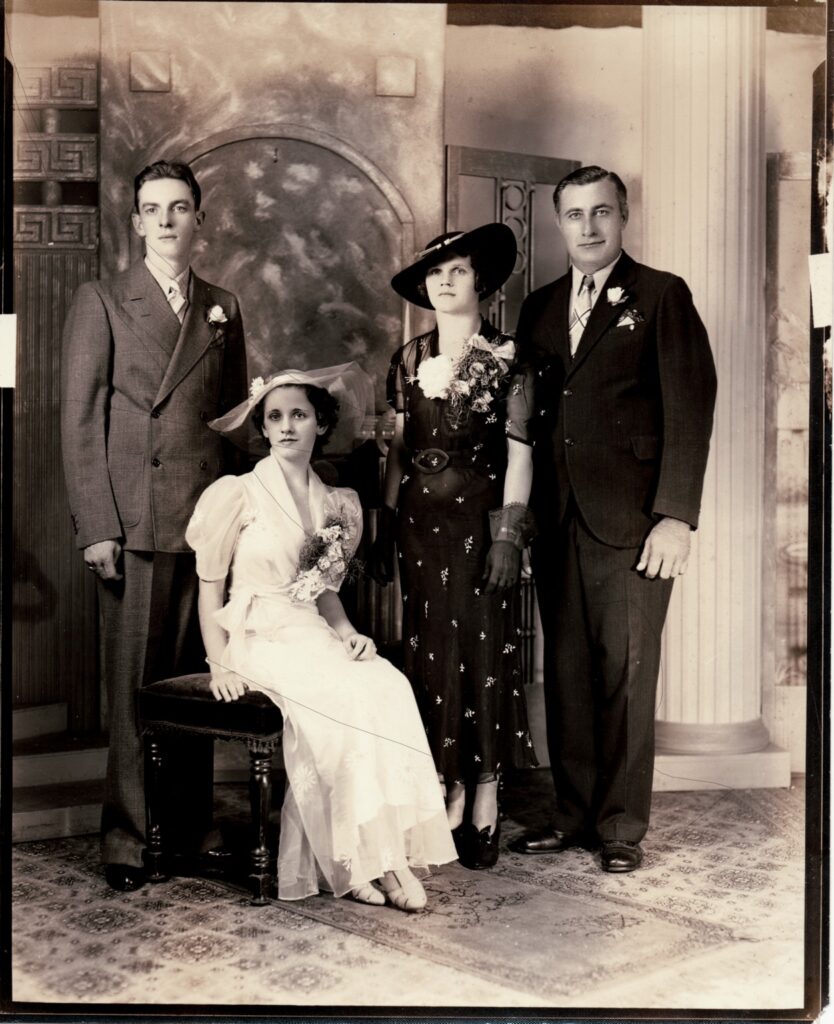
At this time, Laverna was living with her mother and stepfather Henry Wolf in Alden, New York. LaVerna Villone and Lyle Van Volkenburg were married at the Townline Lutheran Church on August 21, 1937. It would have been a fairly small ceremony of close family and friends. Since Lyle’s mother and father were already deceased it would have been mostly Laverna’s family present at the Wedding.
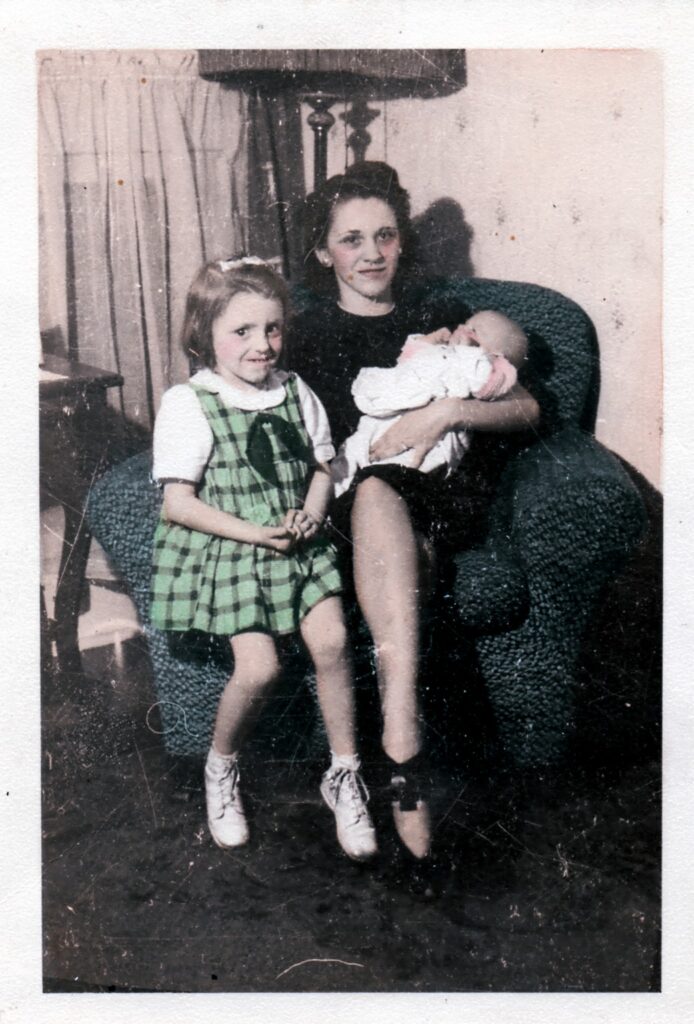
Laverna and Lyle Van Volkenburg lived on Jeanette and Henry Wolf’s farm while Laverna was pregnant and in order for Jeanette to help her care for the baby. Soon after, Nancy Carol Van Valkenburg was born March 7, 1938.
At some point, Lyle and LaVerna left the comfort and familiarity of the Wolf family farm to try and build an independent life of their own. By 1939, they were living at 83 Wadsworth Avenue in Buffalo, a modest rooming house in a lively urban neighborhood. During this period of transition, they were still finding their way. Jeanette Wolf, ever the dependable matriarch, was caring for their daughter, Nancy, at the family farm.
Another Brush with the Law: Trials and Missteps

But hardship followed Lyle. On March 31, 1939, he was arrested and charged with burglary and larceny involving the Liberty Shoe Store, located just a short seven-minute walk from their residence. At just 22 years old, this episode marked a troubling turn. The details surrounding the incident are unclear: Was it an act of desperation during difficult times? A misstep in judgment? Or perhaps a misunderstanding? The outcome of the charges remains lost to time, yet this moment offers another glimpse into the challenges and imperfections that often lie beneath even the most resilient lives.
As Lyle continued to carve out a life for himself and Laverna in Buffalo, his determination opened new doors. After his time at Curtiss Aeroplane, he secured a position at the DuPont Yerkes Plant in Tonawanda, New York, where he worked from June 1939 to November 1939 as a cellophane technician. This was not just any job, it was an opportunity tied to a growing technological frontier. Cellophane, once a novelty, was now vital. With war clouds gathering over Europe, American industry was mobilizing. DuPont ramped up production of cellophane to package and preserve military rations, keeping food fresh and troops fed.
Lyle was part of that vital effort. The steady pay and consistency of his work at DuPont provided much-needed stability in those uncertain times. And though he may not have known it yet, those years would prepare him for even bigger challenges ahead, challenges that would take him far from Buffalo, and into the service of his country.

Not long after, Lyle and LaVerna returned to the Wolf farm. It was there, in the midst of rebuilding and regrouping, that their second child, Darleen, was born on January 9, 1942. However, life on the farm was changing, and so was the country.
The Call to War: Duty, Destiny, and the Skies
With World War II underway, the prospect of military service offered many young men, including Lyle, a chance at redemption, steady income, and renewed purpose. Whether driven by patriotism, necessity, or a desire to leave past troubles behind, Lyle enlisted in the Army Air Forces to become a Pilot soon after Darleen’s birth. From this point forward, his life is well documented. Thanks to my great-grandmother Jeanette’s habit of saving everything, the secrets of the past were preserved rather than lost. After her death, a suitcase emerged from the attic we were never allowed to go in, filled with photographs, military documents, and even the flag presented to the family during Lyle’s mock funeral. It was a time capsule of a life both complicated and courageous.
Laverna remained with her two daughters on the Wolf farm for a time. But the call of the city tugged at her once more. She began to leave the children in her mother’s care for longer and longer stretches, until finally, she abandoned them entirely and returned to Buffalo. Once again, it fell to Jeanette and Henry Wolf to raise Nancy and Darleen, quiet acts of duty and devotion that held the family together when others could not.
To be continued in Part II – The Military Career and Death of Lyle Van Volkenburg, where we follow his transformation from a young man scarred by loss into a dedicated airman serving his country, only to meet a tragic end far from home.